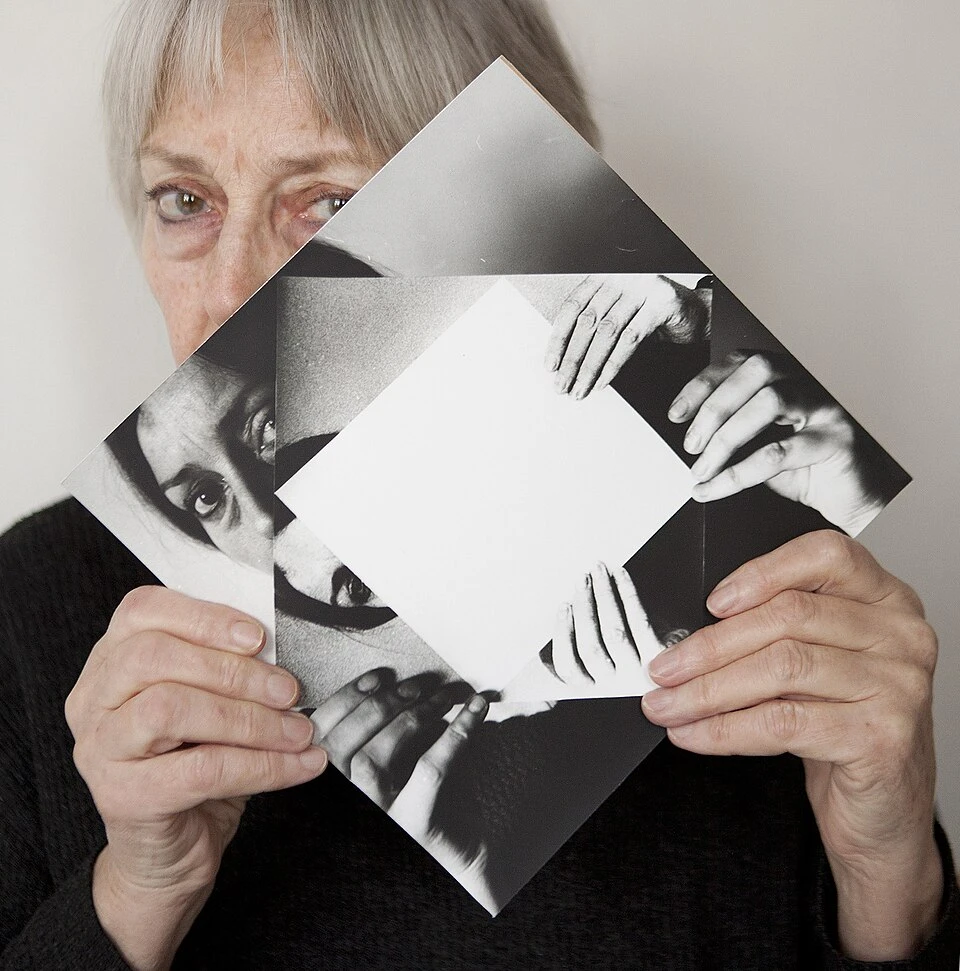
Dóra Maurer, the Hungarian visual artist whose experimental work explored the intersection of math and movement, died Feb. 14, 2026. She was 89.
Maurer spent over five decades working in nearly every medium, including film, photography, painting, and sculpture. She trained as a graphic artist in the 1950s but gained recognition for her avant-garde projects during the 1970s. Her art relied on complex mathematical systems and geometric patterns to break down simple actions into visible motion. She often collaborated with musicians and conducted creative workshops to show viewers different ways to perceive time and space.
During Hungary’s socialist regime, Maurer worked within an independent community of artists outside the official state system. Her minimal aesthetic served as a form of silent defiance against the government-mandated style of Socialist Realism. From 2019 to 2020, she reached a global audience through a major retrospective at the Tate Modern (London). This exhibition marked the first comprehensive survey of her career in the United Kingdom.
Maurer served as a professor at the Faculty of Fine Arts in Budapest and worked as a curator to support younger artists. Her pieces are held in permanent collections worldwide, representing her shift from graphic prints to abstract installations. She continued her professional work within the Hungarian art community until the end of her life.